Headlines · Fact Check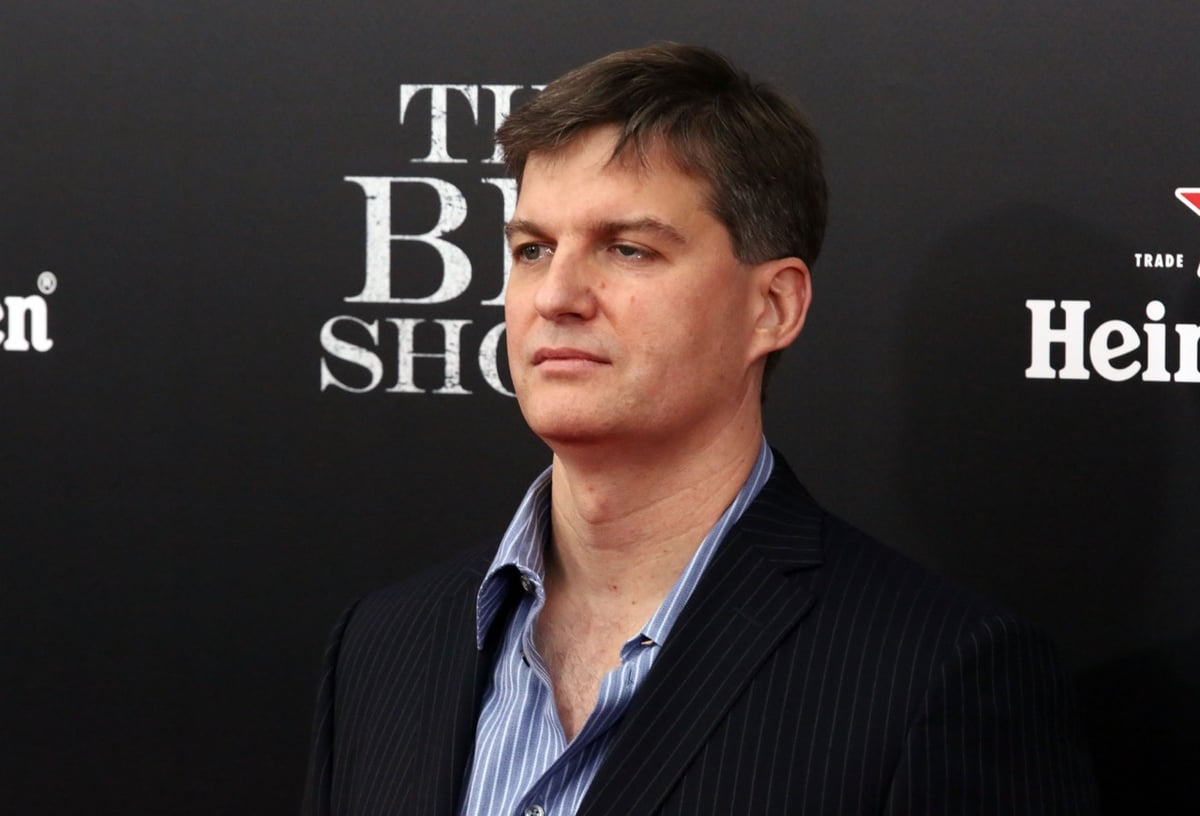
One of the most exciting yet controversial stocks in the market today is no doubt Palantir Technologies ( PLTR -0.68% ) . The stock is up nearly 675% over the past five years, as of this writing, but it has also drawn criticism from respected short-seller Michael Burry. Burry made a name for himself by calling the housing collapse and is one of the key figures in the movie The Big Short , which documented that collapse.
The running joke around Palantir has long been that no one actually knows what the company does, despite the stock's strong performance. The company was formed shortly after the Sept. 11, 2001, terrorist attacks and was backed by PayPal co-founder Peter Thiel, who believed PayPal's fraud-detection framework could be adapted for use by security analysts. Image source: Getty Images.
Palantir's first commercially successful product, stemming from these efforts, was its Gotham platform. The solution could gather and analyze data from disparate sources and help spot anomalies to detect potential threats. The government used the platform to follow money trails to uncover terrorist activities, and its Foundry solution was later adopted to track COVID-19 cases.
Today, its platforms are used for a variety of use cases by the government, including out on the battlefield, helping with military intelligence. While Foundry is used by the government, it has also helped push the company into the commercial market. Foundry aggregates information from various parts of an organization and unifies it into an ontology that links the data to physical objects and real-world processes.
The solution took off after the company built its Artificial Intelligence Platform (AIP) on top of it, serving as an AI orchestration layer. The combination of clean data that can be linked to physical assets and everyday concepts has significantly reduced AI hallucinations in third-party AI models and delivered actionable insights. In essence, this has turned Palantir's AIP into something akin to an AI operating system.
Palantir consistently reports accelerating growth The rise of AI and the launch of Palantir's AIP set in motion huge growth for the company, especially in the U.S. commercial sector. The company's revenue growth has now accelerated for 12 consecutive quarters, culminating in a huge 93% year-over-year surge in Q2 2026. Metric (YOY) Q2 2023 Q3 2023 Q4 2024 Q1 2024 Q2 2024 Q3 2024 Q4 2024 Q1 2025 Q2 2025 Q3 2025 Q4 2025 Q1 2026 Q2 2026 Revenue growth 13% 17% 20% 21% 27% 30% 36% 39% 48% 63% 70% 85% 93% Source: Company earnings reports.
YOY = Year over year. U.S. commercial revenue has been leading the way, skyrocketing 149% last quarter to $764 million in the quarter, while U.S. commercial remaining deal value soared 124% to $6.24 billion. The company is both adding new customers at a strong clip and seeing rapid growth with existing customers.
Last quarter, its U.S. commercial customer count rose by 35% year over year and 6% sequentially. Perhaps the most impressive metric from Palantir's Q2 report, though, was its net revenue retention , which measures revenue growth from existing customers that have been with the company for more than 12 months. This metric came in at an eye-popping 157%.
Despite Palantir's impressive growth, Burry has thrown shade on the stock and has been increasing his short position. The most obvious knock on the stock is its valuation, which currently sits at a forward price-to-sales (P/S) ratio of 37 times 2027 analyst estimates. That's a hefty valuation, although the hypergrowth Palantir is currently experiencing can bring that multiple down pretty quickly if it can be sustained.
Premium Feature Moneyball Superscore 87 /100 Today's Change ( -0.68 %) $ -1.29 Current Price $ 188.75 Burry has also argued that Palantir's metrics resemble those of a consulting firm like Accenture rather than a software-as-a-service (SaaS) company, given its mounting receivables. However, the company's 85% gross margin doesn't look like anything close to Accenture's 32% gross margin last quarter, and its receivables are tied directly to how the government pays its customers. Burry also thinks AI models could threaten Palantir's competitive moat.
First, admitting the company has a moat seems to contradict his first argument that it is more akin to a consulting firm, as expressing concern over a threat to a moat implicitly acknowledges that a moat exists in the first place. Meanwhile, the importance of AI-model-agnostic software layers is becoming more evident by the day. AIP does not compete with AI models, and instead is a hugely important orchestration layer that sits on top of them.
Overall, while I agree Palantir stock isn't cheap, I still think it could become one of the largest and most important AI companies in the world over the next decade. This makes the bullish case stronger. Geoffrey Seiler has positions in PayPal.
The Motley Fool has positions in and recommends Accenture Plc, Palantir Technologies, and PayPal. The Motley Fool recommends the following options: long January 2028 $260 calls on Accenture Plc, short December 2026 $62.50 calls on PayPal, and short January 2028 $280 calls on Accenture Plc. The Motley Fool has a disclosure policy .
Source: The Motley Fool